

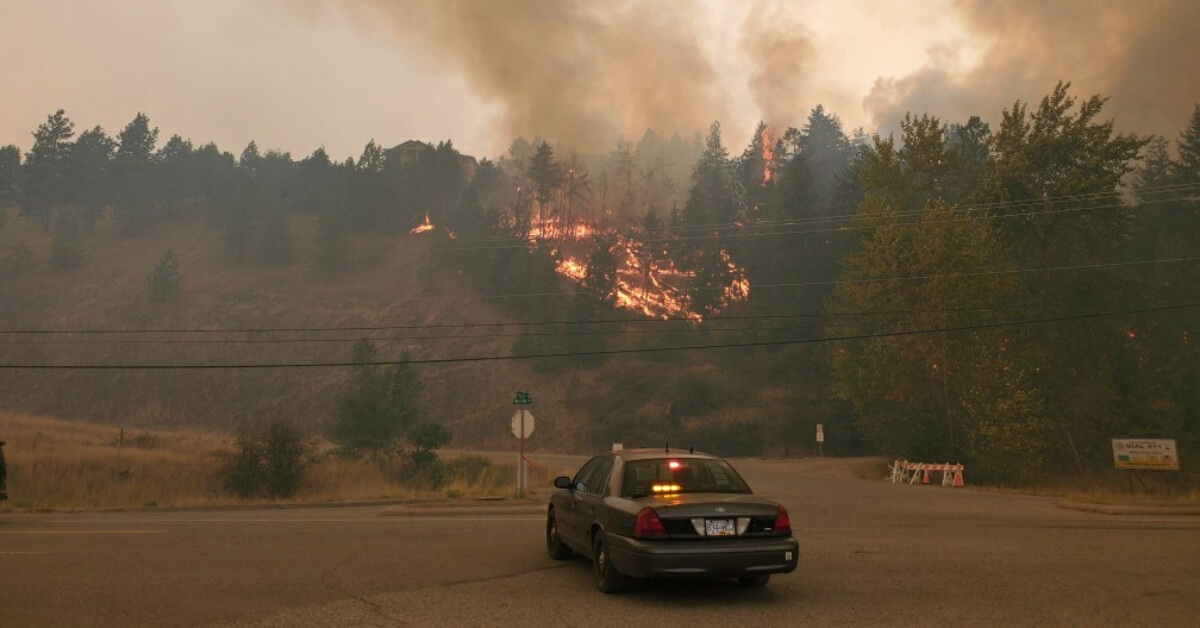
No matter how prepared a community may be, natural disasters don’t wait. Wildfires, floods, earthquakes, and storms arrive quickly, escalate without warning, and can leave lasting impacts on those in their path.
When Canadians think about wildfires, the image that often comes to mind is firefighters battling flames on the front lines.
That work is critical, but there’s more to the story.
Behind the flames, amid dangerous and rapidly changing conditions, RCMP Members are carrying out essential public safety roles: coordinating evacuations, protecting people, securing communities, and holding everything together as the crisis unfolds. All while their own families are being evacuated and their own homes are under threat.
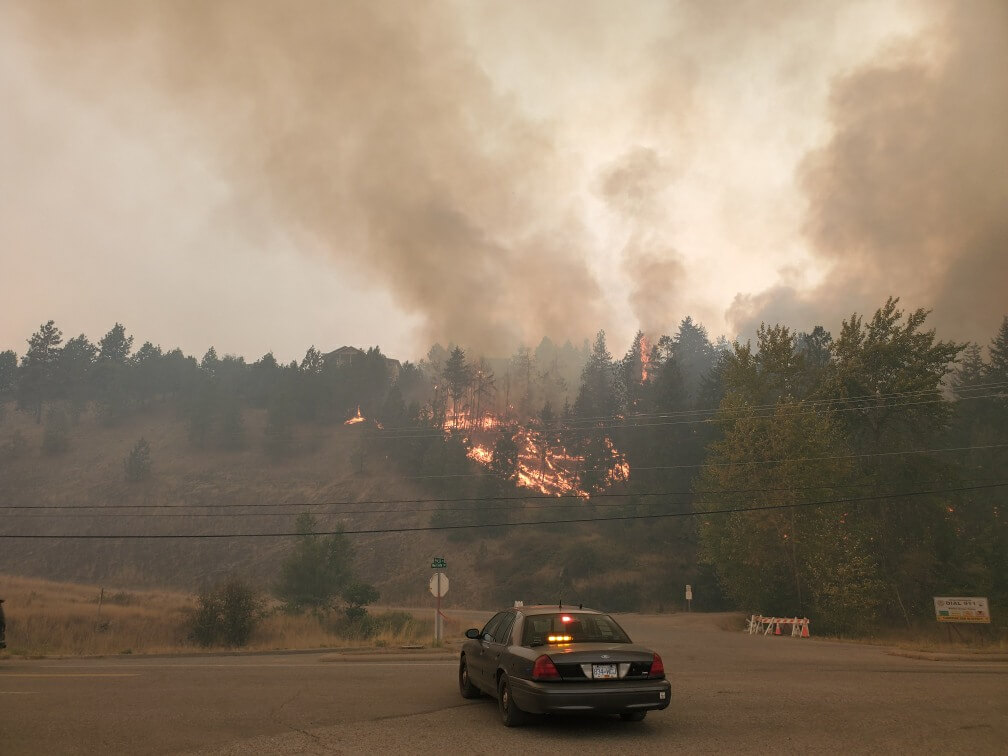
Behind the Scenes of Disaster
This is where the demanding reality of RCMP Members in wildfire emergencies becomes immediately clear.
“When a fire starts, we are involved from the very beginning,” says RCMP Inspector Judith Bertrand, who served as a Sergeant and Watch Commander at the time of the 2023 McDougall Creek wildfire in British Columbia.
In regions like the Okanagan in B.C., where dry summer conditions make wildfire risk a constant reality, RCMP Members are frequently dispatched to reports of small fires, many of which are quickly contained.
But large-scale wildfire response is different.
“It is sustained, demanding work,” Insp. Bertrand says. “We establish and maintain roadblocks for extended periods, engage with understandably distressed residents seeking access to their homes or to retrieve pets, and provide reassurance in moments of uncertainty while also adhering to strict safety protocol for us and the public.”
From the outset, Members are securing scenes, managing traffic, coordinating with emergency partners, and going door-to-door to ensure residents leave safely. Decisions are made in real time, often as conditions shift by the minute.
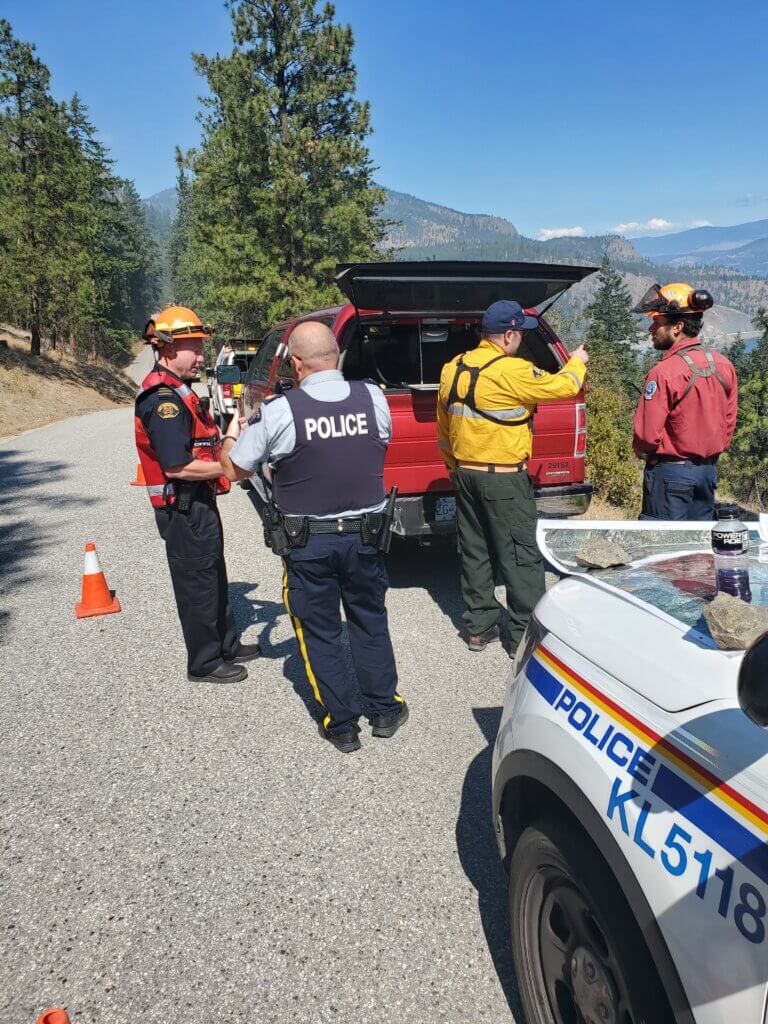
For many Members, the experience is deeply personal. The communities they protect are not just places they work; they are places they know and often call home.
When the Situation Escalates
That reality came into sharp focus during the 2023 wildfire season in British Columbia’s Okanagan region.
In August, a wildfire ignited north of West Kelowna and quickly intensified. In a dramatic turn, flames crossed Okanagan Lake, igniting new fires near Kelowna. Together, the McDougall Creek, Walroy Lake, and Clarke Creek fires became known as the Grouse Complex.
More than 15,000 hectares burned. Over 30,000 people were forced from their homes. Hundreds of structures were damaged or destroyed, most of them residences.
For Cpl. Marty Walker, a nearly 25-year RCMP veteran now based in Kelowna, the speed of escalation underscored how quickly policing priorities shift during for RCMP Members during wildfires.
“We’re placed on call to be deployed out at basically a moment’s notice to help smaller detachments,” he says.
When the Grouse Complex fires intensified, that call came.
“You have the firefighters and BC Wildfire fighting the fires, and we’re just a few steps behind them to evacuate the people and protect them from this monster that’s approaching the community.”
One of the most difficult aspects of the response was witnessing loss unfold in real time.
“You have people that have worked their whole lives for their homes… and they’re gone within minutes,” he says. “It’s one of the most traumatic and unimaginable events a person could have.”
What the public doesn’t always see is that RCMP Members are often living through the same disaster.
“I’ve been to fires where Members lost their homes and they’re still working,” says Cpl. Walker.
He recalled one moment that captured that reality:
“A Member asked for a few minutes to help their spouse load their vehicle during an evacuation and then came right back to work.”
That balance—between duty and personal impact—is something Members carry quietly.
Coordinating Chaos in Real Time
As a wildfire grows, so does the complexity of the response.
Behind the scenes, RCMP Members operate within a coordinated emergency structure alongside fire services, paramedics, and local authorities.
Staff Sergeant Duncan Dixon, who has spent more than three decades policing in British Columbia’s Interior, has seen how quickly situations escalate.
“You determine what the risk is, and then the Fire Chief can say, ‘evacuate this area,’” he explains.
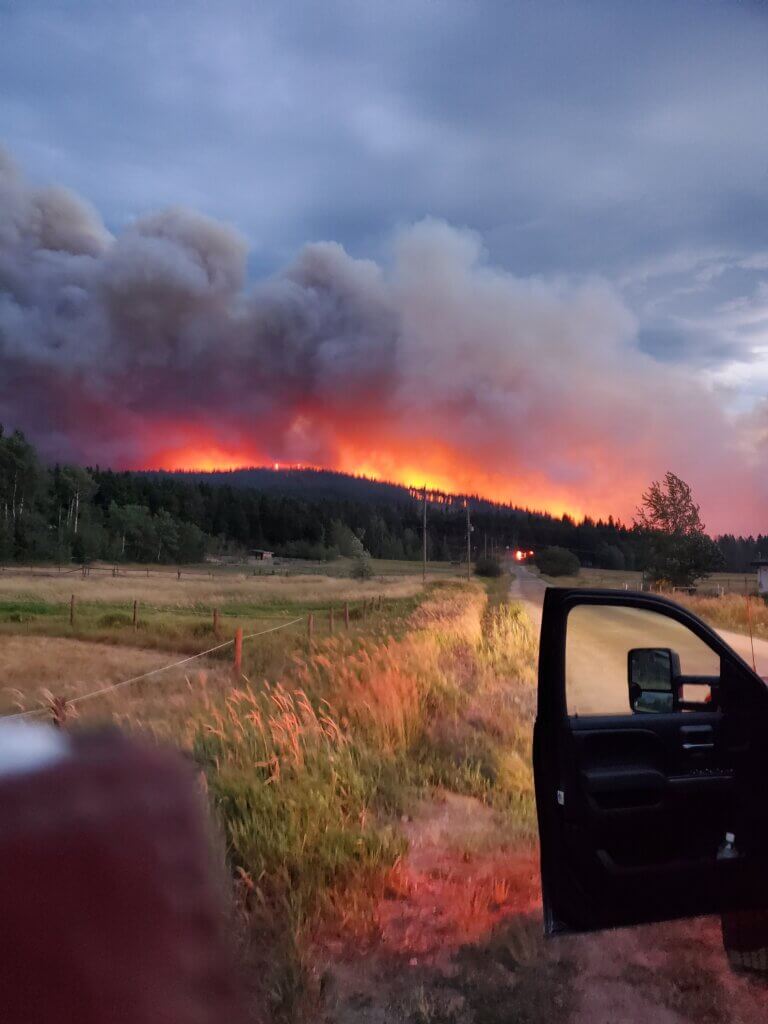
From there, RCMP Members act immediately.
“There’s no time to talk about it,” he says. “We need to do it now.”
Decisions are made quickly, based on evolving risk, geography, and access.
“You’re talking that over with the Fire Chief all the time,” adds S/Sgt. Dixon. “Hundreds and hundreds of hours.”
That constant coordination ensures that responses remain aligned, even as conditions change by the hour.
Evacuations: The Most Critical Responsibility
Evacuations are among the most urgent and complex responsibilities RCMP Members face during a wildfire.
Members notify residents, manage traffic flow, keep evacuation routes clear, and assist those who need help leaving. At the same time, they must navigate the emotional reality of asking people to leave everything behind.
“Residents want to get back to their homes, to check on pets, to gather belongings,” Insp. Bertrand says. “We’re there to listen, to explain, and to make sure they understand the risk.”
Those interactions are not easy.
“People are understandably distressed,” she says. “You’re asking them to leave their homes without knowing what they’ll come back to.”
In rapidly changing conditions, there is often little time to prepare.
“I am aware of officers who personally transported residents out of affected areas when time and circumstances demanded it,” Insp. Bertrand adds.
In those moments, professionalism, composure, and compassion are essential.
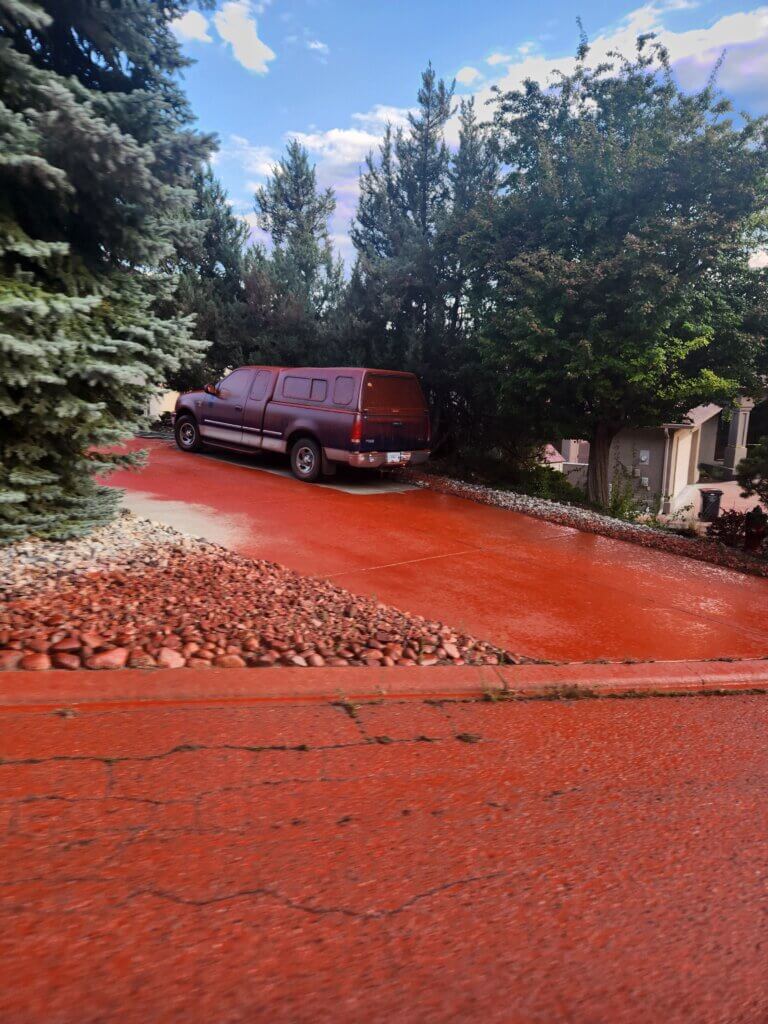
Creating Structure in Unpredictable Conditions
As evacuations expand and neighbourhoods empty, RCMP Members shift to maintaining safety and order across large areas.
This includes establishing roadblocks, controlling access points, and ensuring emergency crews can move efficiently.
“You’re creating roadblock areas and patrol patterns through the town,” explains S/Sgt. Dixon.
Those decisions are strategic and constantly evolving.
“Is there one road in? Are there ten roads in?” Cpl. Walker adds. “Maybe we only need two checkpoints instead of ten.”
Each decision directly impacts how safely a community can be evacuated, and how effectively emergency responders can do their work.
Protecting Communities After Evacuation
Once residents have left, another phase of policing begins.
“Our job was to make sure that our community was not taken advantage of,” says Insp. Bertrand.
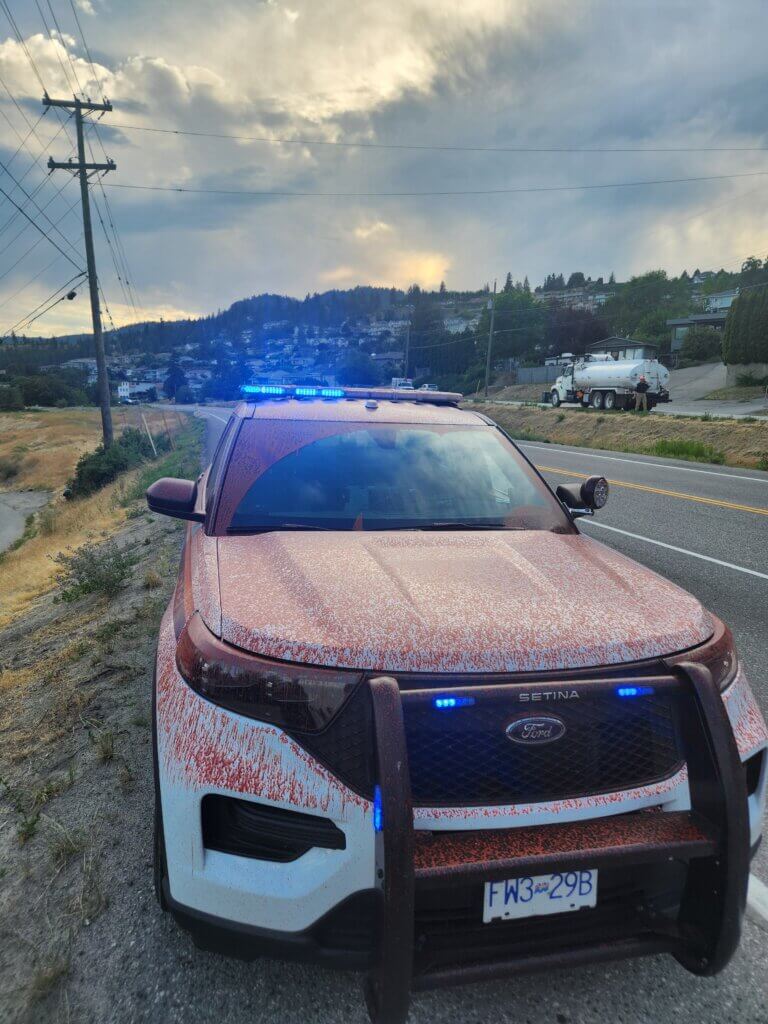
“We’ve charged people for break and enters… people trying to go back in and take advantage of empty homes during a disaster,” S/Sgt. Dixon says.
At the same time, their presence offers reassurance to displaced residents.
“We’re send the message that your property is safe, that we’re here to look after it while you’re away,” he adds.
One Response, Many Partners
Wildfire response is never carried out alone.
“You’ve got fire, you’ve got police, you’ve got ambulance—it all works together,” says Cpl. Walker.
That collaboration is constant and essential, built on communication, trust, and shared responsibility.
During large-scale emergencies, those partnerships ensure that communities can respond effectively, even in the most unpredictable conditions.
When the Smoke Clears
As fires are brought under control and evacuation orders are lifted, the role of RCMP Members continues.
“The decisions to reopen roads and neighbourhoods are made carefully,” says Insp. Bertrand. “We want to make sure it’s safe and coordinated.”
For residents, returning home can be uncertain and emotional.
“People are coming back to uncertainty,” Insp. Bertrand said. “Some don’t know what they’ll find.”
But between the heartbreak, there are positive moments that stay with Members.
“For me, seeing people return home was always meaningful.”
More Than What You See
Natural disasters in Canada are becoming more frequent and more complex.
While images often focus on flames and firelines, the full picture tells a broader story.
RCMP Members are there coordinating evacuations, protecting communities, and working alongside partners to keep people safe.
Often, they are doing so while facing the same uncertainty and loss as the people they serve.
Even after the flames are out, their work continues. They patrol quiet streets, safeguard what remains, and help communities take their first steps toward recovery.
Because when disaster strikes, Members help communities rise from the ashes.