

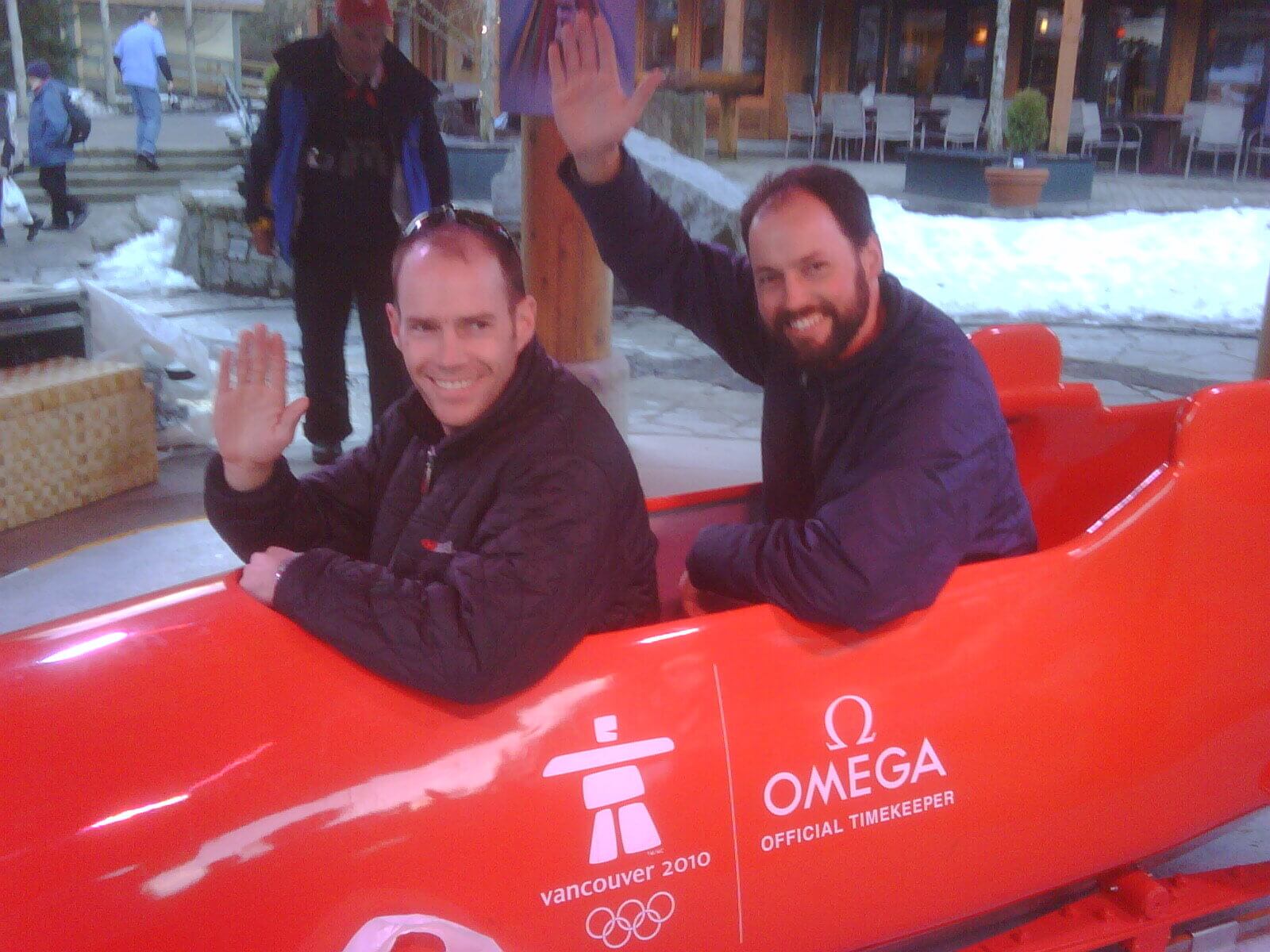
When Canadians tuned in to cheer for athletes chasing gold at the Vancouver 2010 Winter Olympics, the world saw excellence on ice and snow. What most didn’t see was the immense planning and expertise behind the scenes to keep the Games safe — work that demanded dedication, adaptability, and unwavering teamwork from RCMP Members and partners across the country.
From the early planning stages in 2003 through to the closing ceremonies in 2010, delivering Olympic security was a years‑long commitment. It required anticipating risks, coordinating across jurisdictions, and preparing for every possible scenario long before the Olympic flame was lit.
Early planning involved mapping every jurisdiction the Games would touch — from the streets of Vancouver and the speedskating oval in Richmond to Cypress Mountain, Whistler’s alpine venues and village, and all points in between, including the Sea-to-Sky Highway. At the same time, the RCMP focused on building strong partnerships with law enforcement, emergency services, and government agencies nationwide.
The RCMP served as the lead agency responsible for establishing the Vancouver 2010 Integrated Security Unit (V2010 ISU). This unprecedented collaboration brought together police officers, military personnel, emergency responders, and federal, provincial, and municipal partners to create a unified security framework that protected both the world’s top winter athletes and the millions of fans who came to cheer them on.
That planning translated into a complex operational reality. With 10 main venues ranging from large arenas to remote mountain slopes, and more than 2,600 athletes competing throughout the Games, security operations were nuanced, wide-ranging, and constantly evolving.
NPF President and CEO Brian Sauvé experienced that reality firsthand. At the time, he was a Corporal with the RCMP deployed during the 2010 Games.
“While most people experience the Olympics as a celebration of sport and community, there are always those who view a global event like this as a target-rich environment,” Brian said. “The stakes are high. As RCMP Members, you prepare for the worst, hope for the best, and measure success in the small wins that keep people safe every day.”
The numbers tell the story:
- More than 90,000 flights arrived in Vancouver related to the Games.
- The RCMP provided protection for approximately 30 world leaders and VIP dignitaries.
- RCMP Members with V2010 ISU processed security background checks for over 204,000 applicants, ensuring every volunteer and staff member was cleared to be part of the Games.
- Twenty-three marine vessels patrolled the waters around Olympic venues 24/7.
- More than 700 police representatives from 39 countries visited Vancouver during the Games to learn how the RCMP planned and executed security operations.
Yet much of the work to keep the Games remained invisible to the public. Police dogs and handlers quietly patrolled venues. Military personnel stood ready in surrounding forests. Emergency medical teams remained on alert. Explosive device sweeps were conducted without fanfare. It was quiet, steady dedication, the kind that allowed the athletes and fans to focus on the thrill of competition, while Canada’s finest focused on their safety.
On the ground, RCMP Members like Brian were deployed across the venues including small mountain villages and remote venues for up to 40 days, even though the Games themselves lasted just 12. Specialized skills including advanced skiing ability, deep knowledge of the terrain, and familiarity with local communities contributed to whether a Member was selected for these roles.
Brian’s assignment during the Vancouver 2010 Olympics was particularly unique. Thanks to his background as a competitive skier, he was assigned to uniformed ski patrol blending operational responsibility with extraordinary experiences.
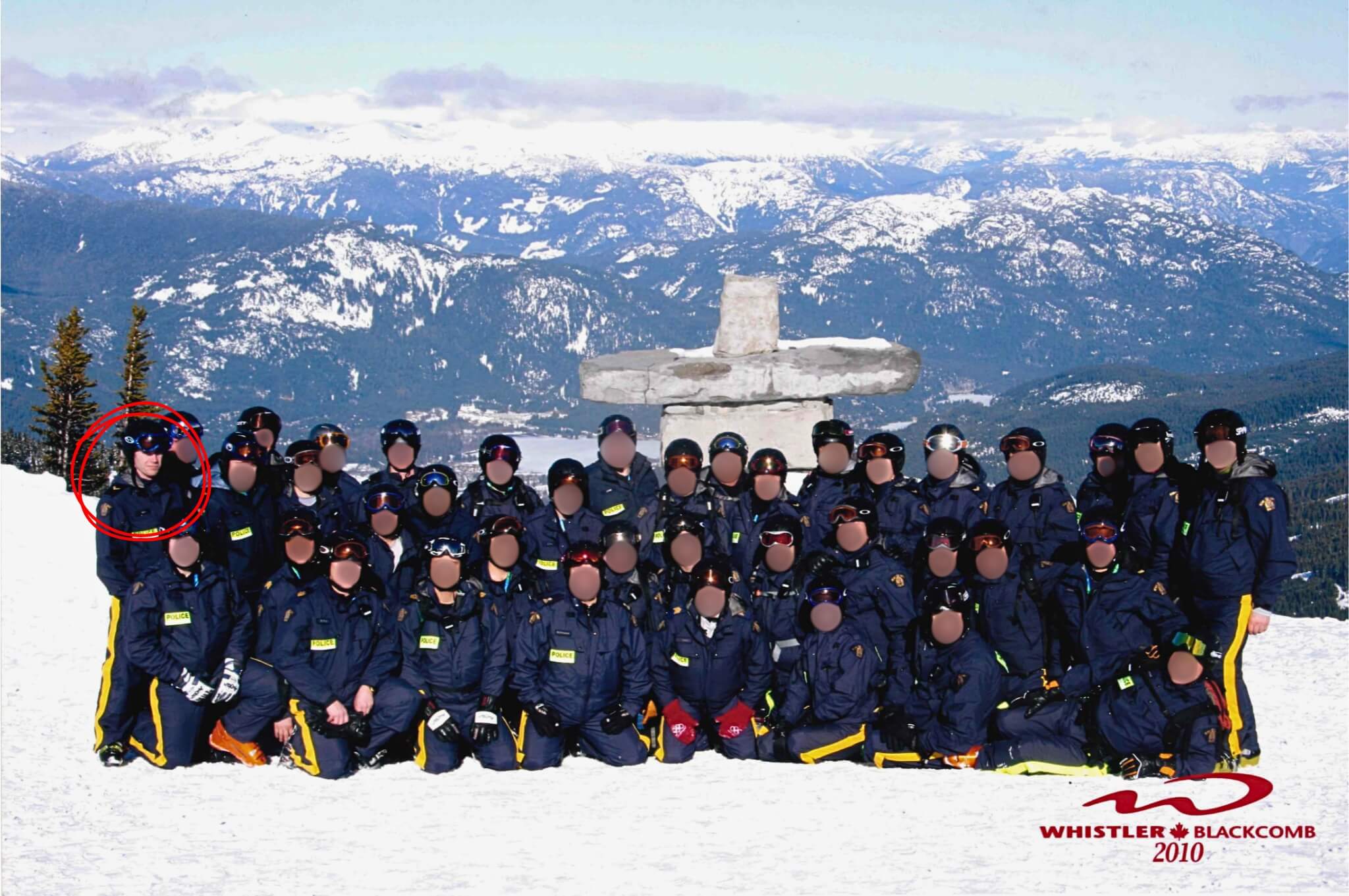
His duties went beyond routine patrols and enforcement. Brian escorted Olympic athletes and coaches up the slopes, assisted them at the top of their runs, and even skied alongside them — if only for a few heart-pounding seconds — all while wearing his full RCMP uniform.
“It was surreal,” Brian recalled. “One moment I’d be on the lift with an athlete like Lindsay Vonn or Erik Guay, helping secure their runs. The next, I’d be enjoying the village in the evening, surrounded by fans from around the world, hearing every language imaginable.”
Looking back, Brian emphasizes that collaboration, preparation, and adaptability were critical to success. The lessons learned in 2010 continue to shape policing for major events today, now enhanced by drones, social media monitoring, body-worn cameras, and modern intelligence tools.
Away from the mountains, the Games were also an electrifying expression of Canadian pride and unity.
“We won a lot of medals, and sometimes you could watch multiple Canadians in medal ceremonies in a single day,” Brian said. “Thousands of people would gather, cheering and celebrating. There was a true sense of togetherness. It wasn’t just about sport; it was about being part of something bigger than yourself.”
Sixteen years later, Brian’s excitement from his time policing the 2010 Games still resonates as he prepares to cheer on Team Canada at the 2026 Games in Italy. “I’m looking forward to seeing the athletes push boundaries, of course, but also the human stories — the moments that bring everyone together,” he said. For Brian, the Games are a powerful reminder that behind every medal moment is a story of diligent preparation and unbreakable teamwork.
The parallel between RCMP Members and professional athletes is unmistakable. Just as athletes train for a defining moment, RCMP Members prepare relentlessly so that, when it matters most, the world can come together safely. As Canada prepares to host another world-class sporting event with the 2026 FIFA World Cup, the lessons learned in 2010 — and the skills refined since — will once again be on display, both in front of the cameras and behind the scenes.