

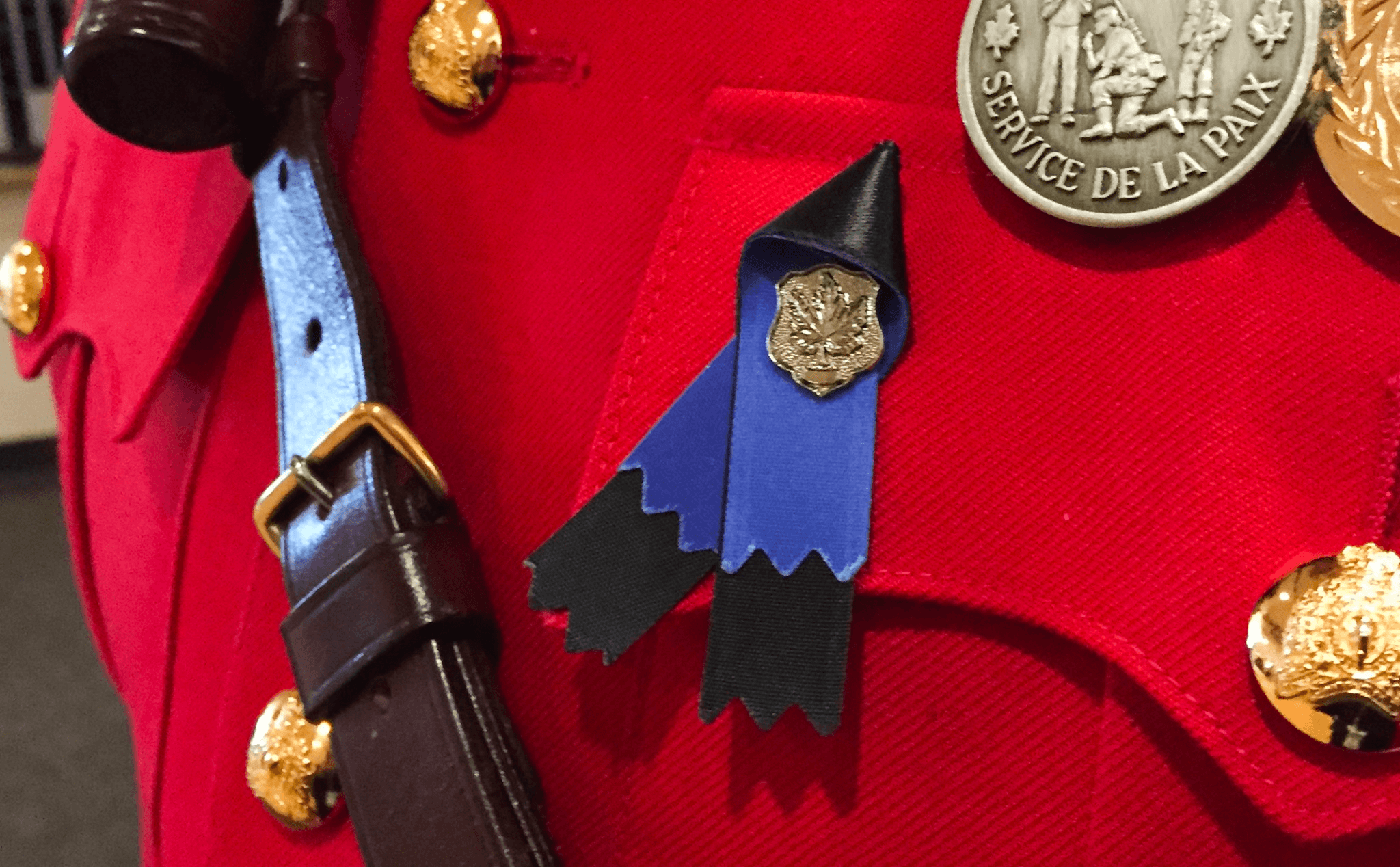
RCMP Members, NPF Board Directors and family members reflect on service, sacrifice and the responsibility to remember.
On September 27, Canadians mark Police and Peace Officers’ National Memorial Day to honour police and peace officers who were killed or lost their lives in the line of duty and to offer condolences to the families who continue to carry their memory. The day is formally recognized on the last Sunday of September each year.
To commemorate this day, the National Police Federation (NPF) invited RCMP Members, NPF representatives and members of the policing community to reflect on why remembrance matters, what it looks like in their own lives, and what we must carry forward.
Some remember friends and colleagues who never returned home. Some reflect on the families left behind. Others speak about the traditions, responsibilities and acts of care that ensure a person never becomes only a name.
Together, their words remind us that remembrance is not confined to a ceremony or a single day. It lives in the stories we preserve, the people we support and the way we value those who continue to serve.
The following reflections have been edited for grammar and spelling and, in some cases, condensed for length and clarity. Contributors’ original meaning and language have otherwise been retained. Some reflections discuss line-of-duty deaths, suicide and other experiences that readers may find difficult.
The People Behind the Names
Anonymous NPF Board Director
“Service has been part of my life for as long as I can remember.
Three of my four grandparents served in the British and Canadian militaries. I grew up as the son of an RCMP Member, listening to my father talk about Members he had served with and known personally who were killed in the line of duty. In 2007, I followed him into the RCMP myself.
As a child, I understood those stories differently than I do now. They were sad stories about people my father knew. Once I put on the uniform myself, those names and stories took on an entirely different meaning.
One of my troopmates, Constable Derek Pineo, was killed on duty. I knew Constable Sarah Beckett. I shared a floor at Depot with Constable Douglas Scott. Through my work with the National Police Federation, I have dealt directly with circumstances where Members were murdered. I have attended funerals and stood beside colleagues and families left behind.
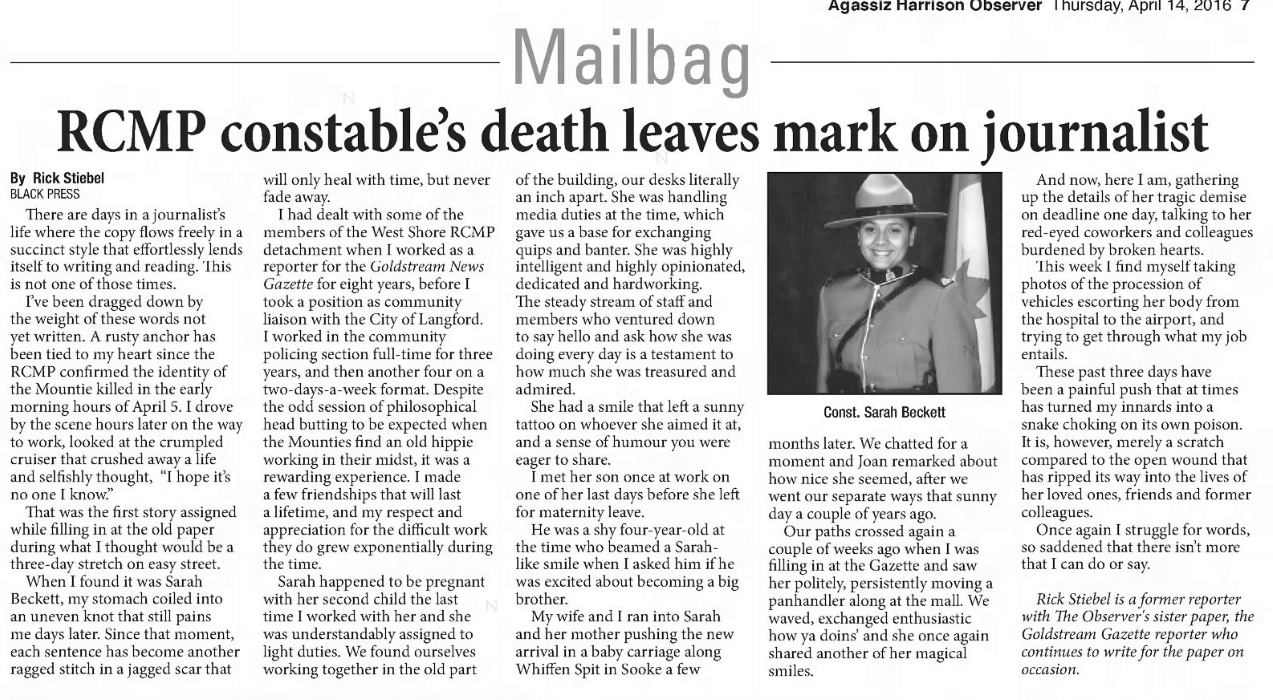
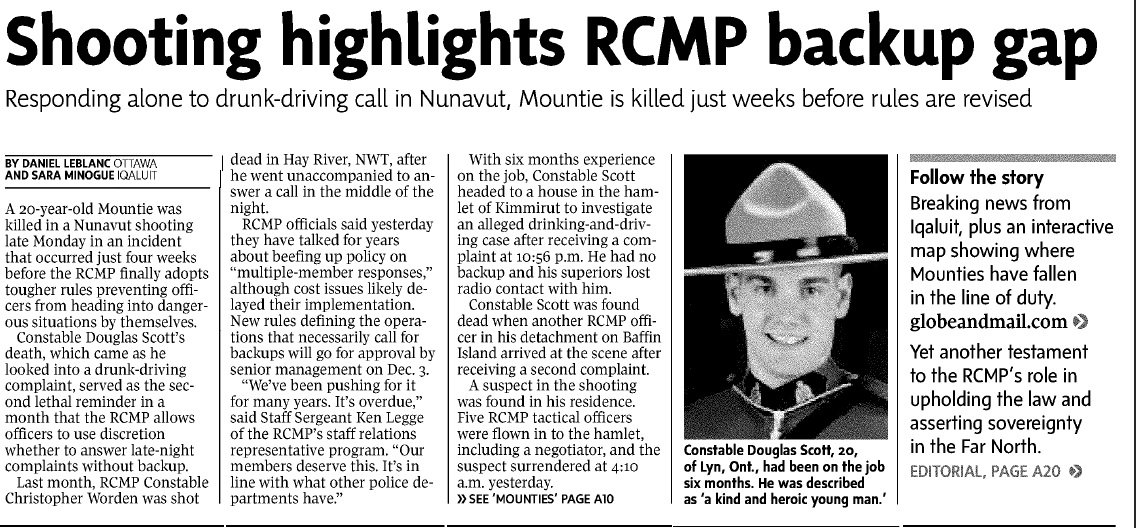
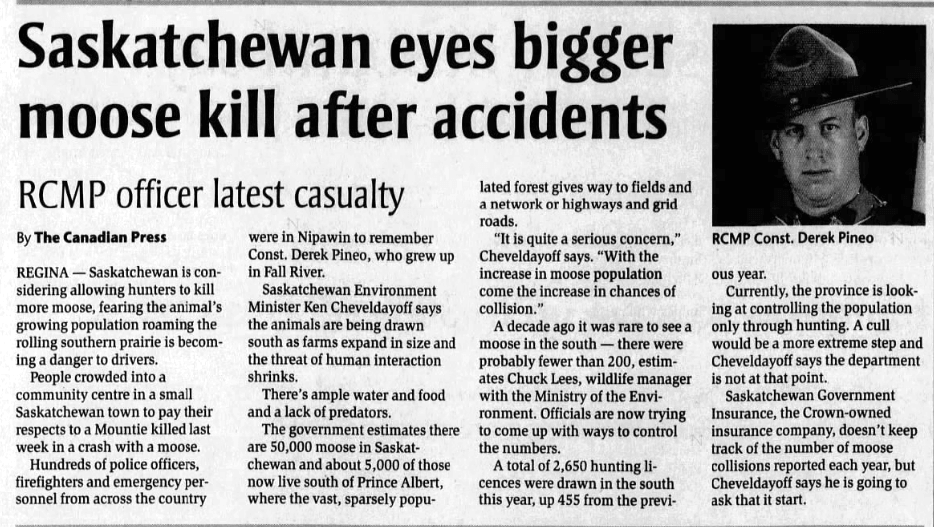
I have also dealt with Members who died by suicide. Those deaths may not always appear on an Honour Roll, but after almost two decades in policing, I do not believe we can pretend that service and what Members are exposed to through that service are always separate from those losses.
So, for me, honouring service is not theoretical.
Service matters. But service can also kill.
Sometimes it kills on a battlefield. Sometimes it is a gunshot while responding to a call for help. Sometimes it is an accident. Sometimes the injury is carried home silently and does its damage over many years.
In every case, someone volunteered to accept risks and burdens on behalf of other people.
At the very least, we all owe them our remembrance.
For me, remembrance means making sure a person never simply becomes a name.
Every name on a cenotaph, Honour Roll or memorial belonged to somebody who laughed, loved people, had plans for the future, probably complained about work occasionally, and had someone expecting them home.
I think remembrance is about keeping that person in the story.
But I do not think remembrance can only be ceremony.
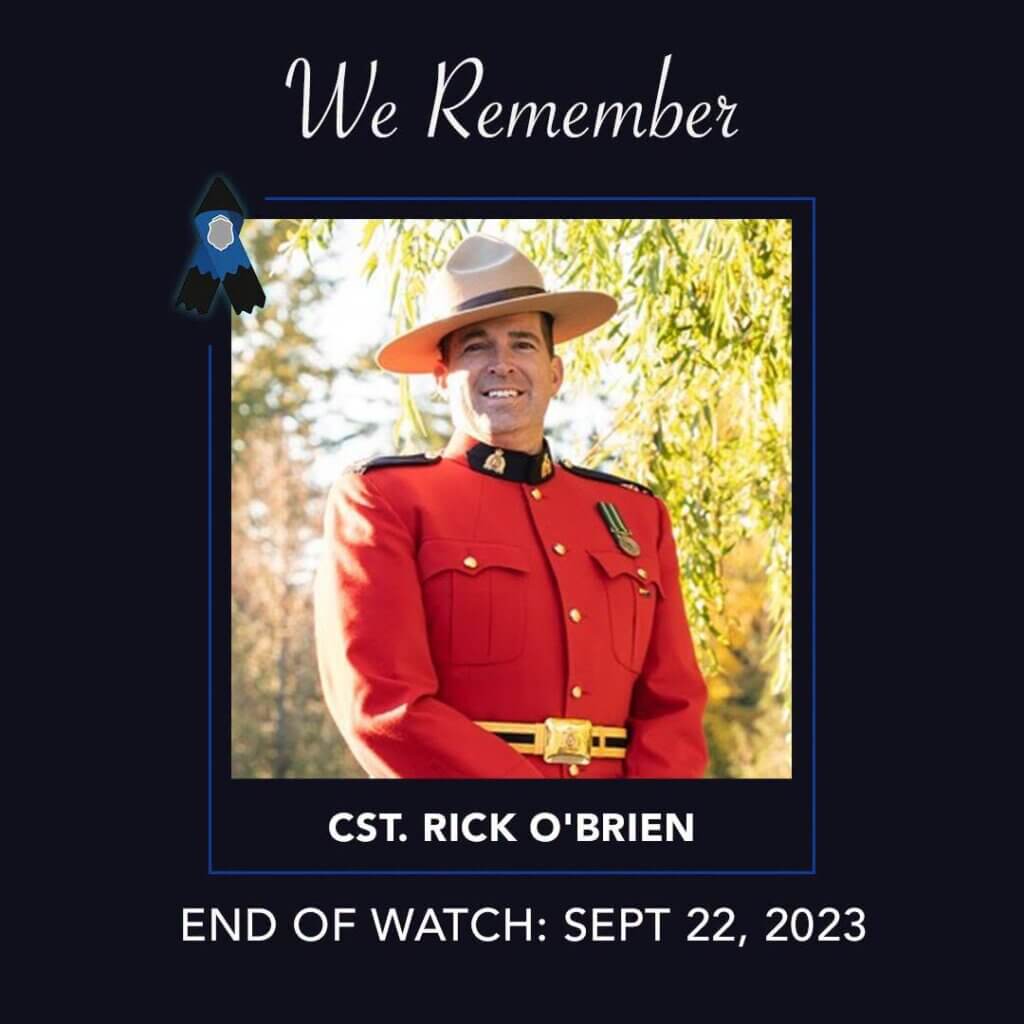
In 2023, while travelling to Constable Rick O’Brien’s regimental funeral, I spoke publicly about something that still bothers me. There is often an enormous outpouring of support when a police officer is murdered, and much of that support is genuine and deeply appreciated. Something as simple as a child’s handwritten card left at a detachment can mean more than people realize.
But I have also questioned why it sometimes takes the death of a police officer before people publicly express how much that service matters.
“We should not have to die before our service is valued. If we truly honour service, we should value the people doing it while they are alive.”
Anonymous NPF Board Director
Remembrance should mean looking after serving Members. It should mean supporting veterans. It should mean looking after spouses and children. It should mean properly resourcing people, giving them safe equipment and workplaces, taking psychological injuries seriously, and recognizing that the effects of service do not necessarily end when a shift or a career does.
I have spent much of my career in frontline policing and leadership roles. I have been involved in critical incidents and supported Members through police shootings and the investigations that follow them. I have seen what those incidents can do even when everyone physically survives.
I have also experienced the quieter losses. Members who carried things for years. Members whose families carried it with them. Members who eventually died by suicide.
Those experiences have taught me that sacrifice does not always happen in a single heroic moment.
Sometimes it happens a little bit at a time.
That is why, when I hear a name read at a memorial, I try to think about the person rather than the circumstances of their death. Their life was bigger than their last day.
I think we owe them that.
But we can remember them. We can tell their stories. We can look after their families. We can take better care of those still serving. And we can make sure that the generations who come after us understand that the lives they enjoy today were not secured without cost.
For me, that is what remembrance is.”
Brandie, RCMP Member
“Those who served before us created the path that we currently walk on. They created everything from successes to changes in policy. They remind us that every day is different. Every shift can bring new challenges. Every call can be the difference.
I remember all the good memories. I know that one call can change a life. Every shift for me is in their honour, for the shifts they no longer get to have.”
Staff Sergeant Jeff Swann, NPF Board Director
“As a fifth-generation police officer, I understand the importance of service, sacrifice and commitment to something greater than oneself.
Honouring those who have served is important to me because their dedication helped shape the country and communities we live in today. Remembering their contributions is a way of showing gratitude and ensuring their legacy lives on for future generations.
My father served 35 years in the RCMP. My mom served as a nurse for almost that entire time as well, with all of this service taking place in small towns in British Columbia, Alberta and the Northwest Territories.
Remembrance is very personal for me. It reminds me of their dedication, their sacrifices and the continual sense of duty shown by generations of the Swann family who have chosen to serve their communities and their country.”
Cpl. Skylar Villeneuve, RCMP Member
“It is important to honour those who came before us and respect the sacrifices they made.
Remembrance means keeping history alive through action, education and deep respect.”
The Moments We Carry
Kevin R. Halwa, NPF Board Director
“As Canada’s police officers and Mounties, there are some dates on the calendar that we all likely remember. For me, on those dates, I can still tell you exactly where I was, what I was doing and who broke the horrible news to me.
These are just some of those dates:
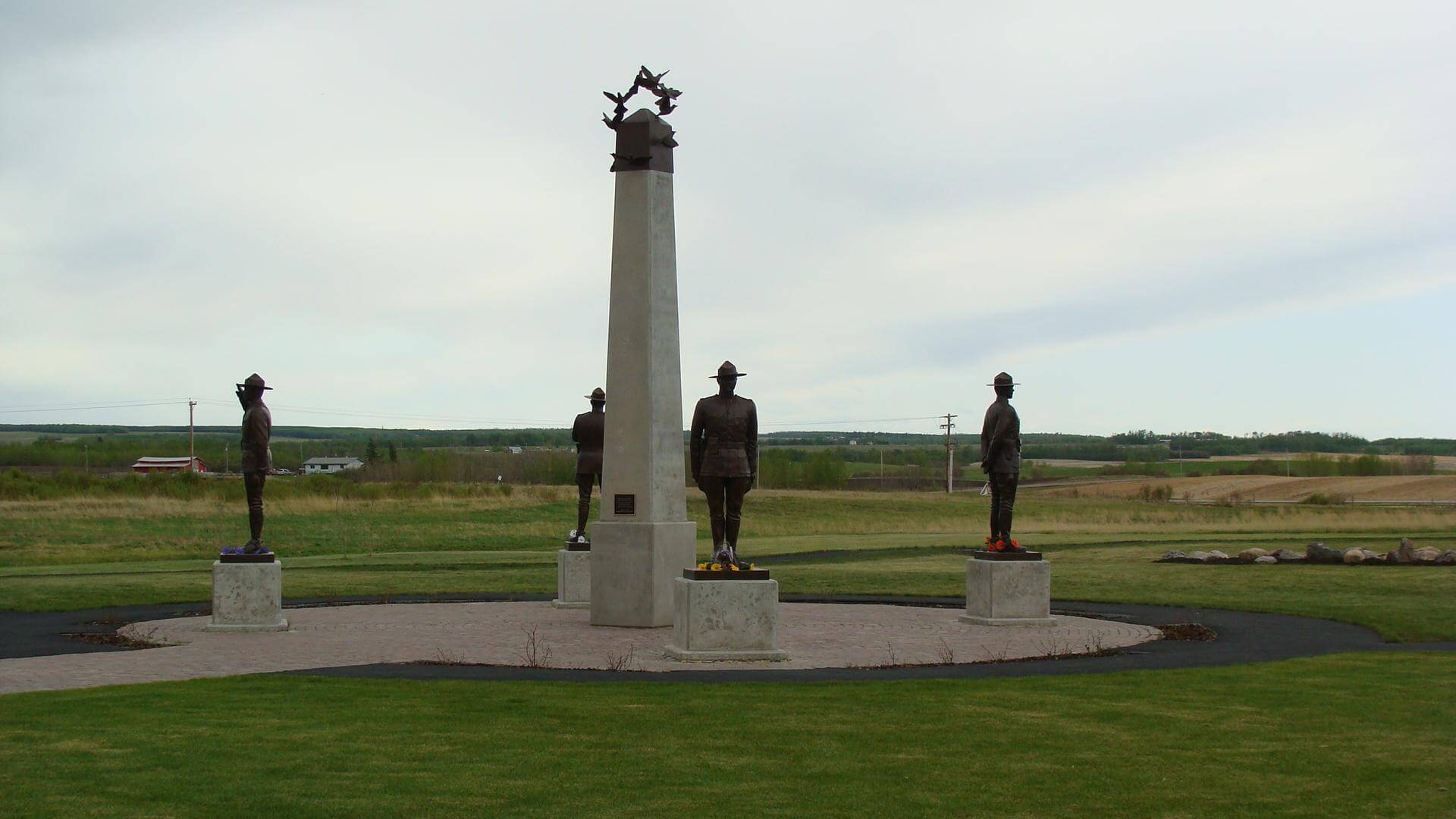
March 3, 2005. That was the day of the Mayerthorpe tragedy and the day we lost four of our brothers.
I was at home, sitting in my recliner and watching a rerun of WKRP in Cincinnati. I started receiving messages from extended family members I had not spoken to in some time, offering their support and condolences and letting me know they were thinking of me.
I have met two of the Fallen Members’ families. A few years ago, I had the privilege of escorting Brock Myrol’s mother as the Silver Cross Mother at Remembrance Day. Brock had not even received his first paycheque when he was killed.
Then there was July 7, 2006.
I was at a family reunion, standing in my recreational vehicle. It was hot and sunny, without a cloud in the sky. My wife came inside the trailer, and I could tell she had been crying. She told me the media had reported that my troopmate Marc had died from a gunshot.
Marc and I were close during training, with beds across the carpeted walkway from each other at Depot. He was the youngest in the troop, turning 21 while in training. At the time of his death, he was newly married and had a very young son.
We often say the Fallen Member paid the ultimate sacrifice. But it could easily be argued that the family has paid just as much, if not more.
And then there is June 4, 2014.
I was in the second week of a carbine instructor course at a range near Rocky Mountain House when we received a message that there had been an incident in Moncton and Members had been killed.
That evening, as the manhunt continued, we sat together as a course cadre in Alberta and watched the news reports, still receiving messages from across the country as our friends were able to send updates.
It was a restless night, to say the least. The suspect was not arrested until the following day.
Not long ago, I met with a Fallen Member’s wife. They say time heals all wounds, but whoever “they” are, they are wrong. The bleeding might stop, but I do not think a spouse can ever truly heal after losing their husband or wife in the line of duty.
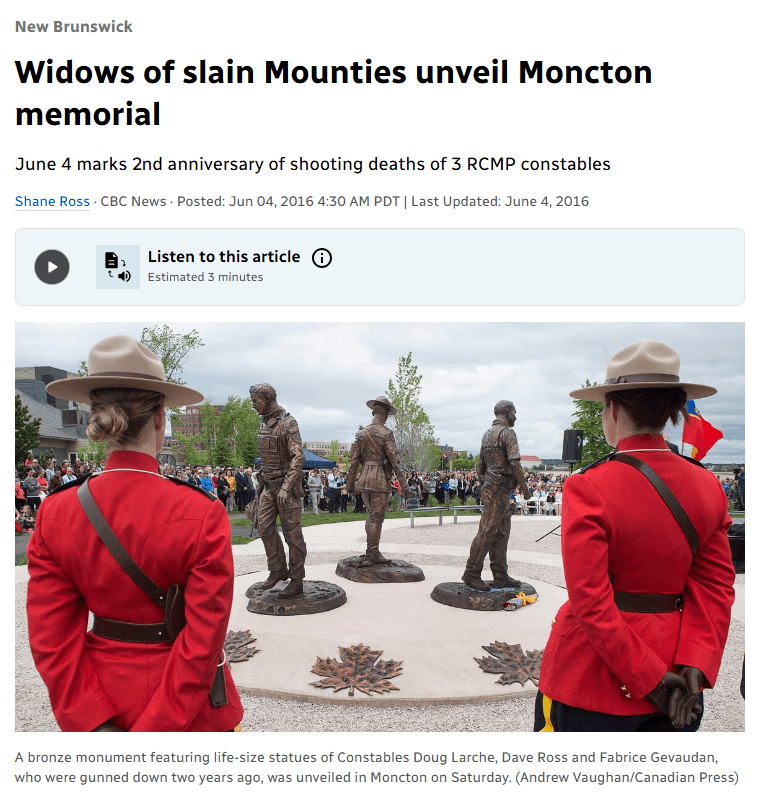
These officers ran toward harm while others ran away. Not because they thought they were heroes, but because it was what needed to be done. They ran toward harm so that others would be safe from it.
Several years ago, I had the opportunity to represent my detachment at the mayor’s prayer breakfast. The guest speaker spoke about the importance of living life the best you can and, hopefully, making a positive difference. He closed his presentation with this thought:
“Life is like a penny. You can spend it any way you wish, but you only get to spend it once.”
These men spent their pennies wisely, putting themselves in harm’s way so others could be safe.
They made a difference. Let that be how they are remembered.”
Sgt. Robert Sayer, RCMP Member
“Those who served have forged a foundation that provides the Members of today with the opportunity to grow, learn and become better Members and people. Without their hard work and sacrifice, we would not enjoy the lives we have today. We owe them a debt of gratitude.
Remembrance is not just showing up for a parade on November 11. It is thinking about our fellow Members often, looking back on the good people we knew and stood shoulder to shoulder with. It is about remembering how they shaped our lives and not letting the candle of their memory go out.
I was on the team investigating Constable Rick O’Brien’s murder. The thing that struck me most, other than the grief, was the camaraderie and pride of the Members who responded that day.
From the traffic squad that escorted his fallen body to its final resting place to those of us at the scene in protective suits, picking up every last fragment of evidence, everybody did their job with a single mindset: do the best and most professional job we could to honour his memory. Miss no detail. Make him proud that those of us left behind would do the best job we could.
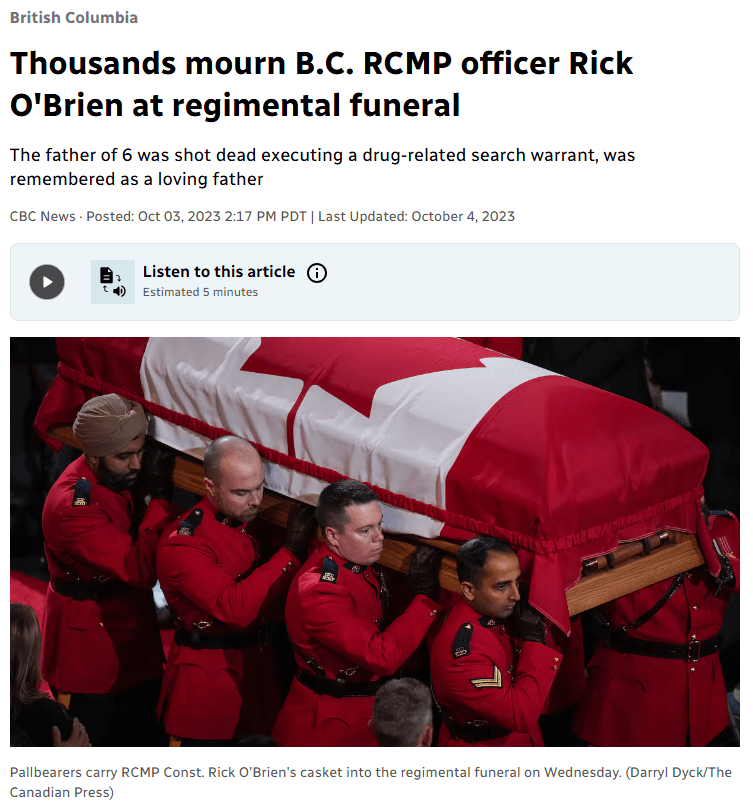
After my final day of the trial, I left the courtroom and ran into his wife outside. I initially felt incredibly awkward and nervous and was not sure what to say to her.
But then she thanked me.
She thanked me for all the hard work we had done and told me she was grateful that so many amazing men and women had come to tell this incredibly difficult story to the court, despite how much it hurt to do so.
That is why we do this, and that is why we remember.”
Cst. Sarah, RCMP Member
“Honouring those who died protecting Canadians is important, but showing support for those who were left behind so tragically is also important.
It means showing them that they will never be alone and that we will keep honouring their loved one who made the ultimate sacrifice.
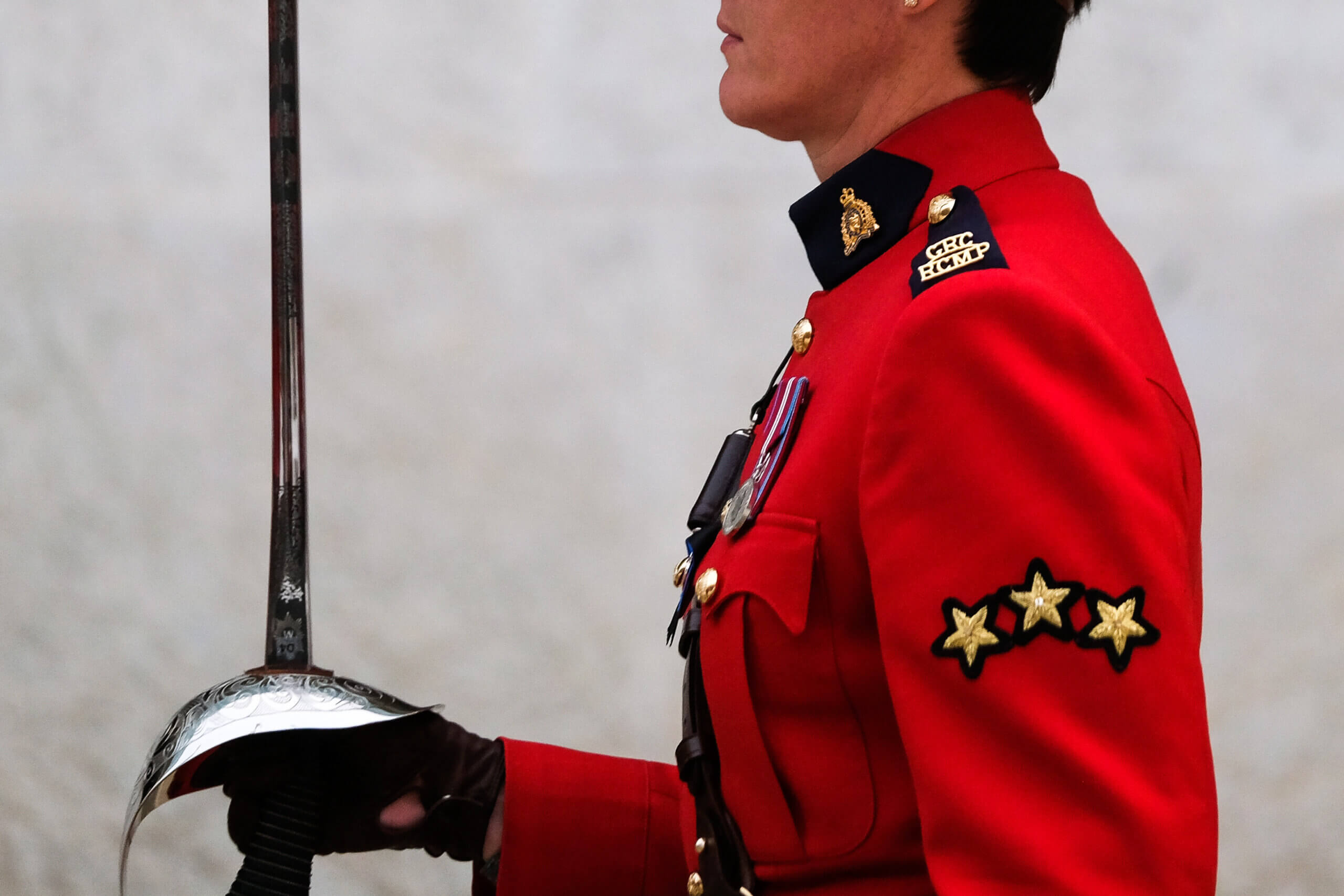
I have marched in Red Serge during most of the parades since I joined the RCMP 12 years ago. I will never forget where I was and how I felt when I learned about each line-of-duty death that has occurred since I joined in 2014.
Participating in these parades is a small commitment on my part to honour those who died serving Canadians and left loved ones behind. It also shows support for those loved ones.
Years ago, I was chatting with a woman who, unbeknownst to me, was the mother of RCMP Constable Chelsey Robinson, who died in an on-duty collision near Stony Plain, Alberta. I was still a young officer at the time, having been on the job for about two years.
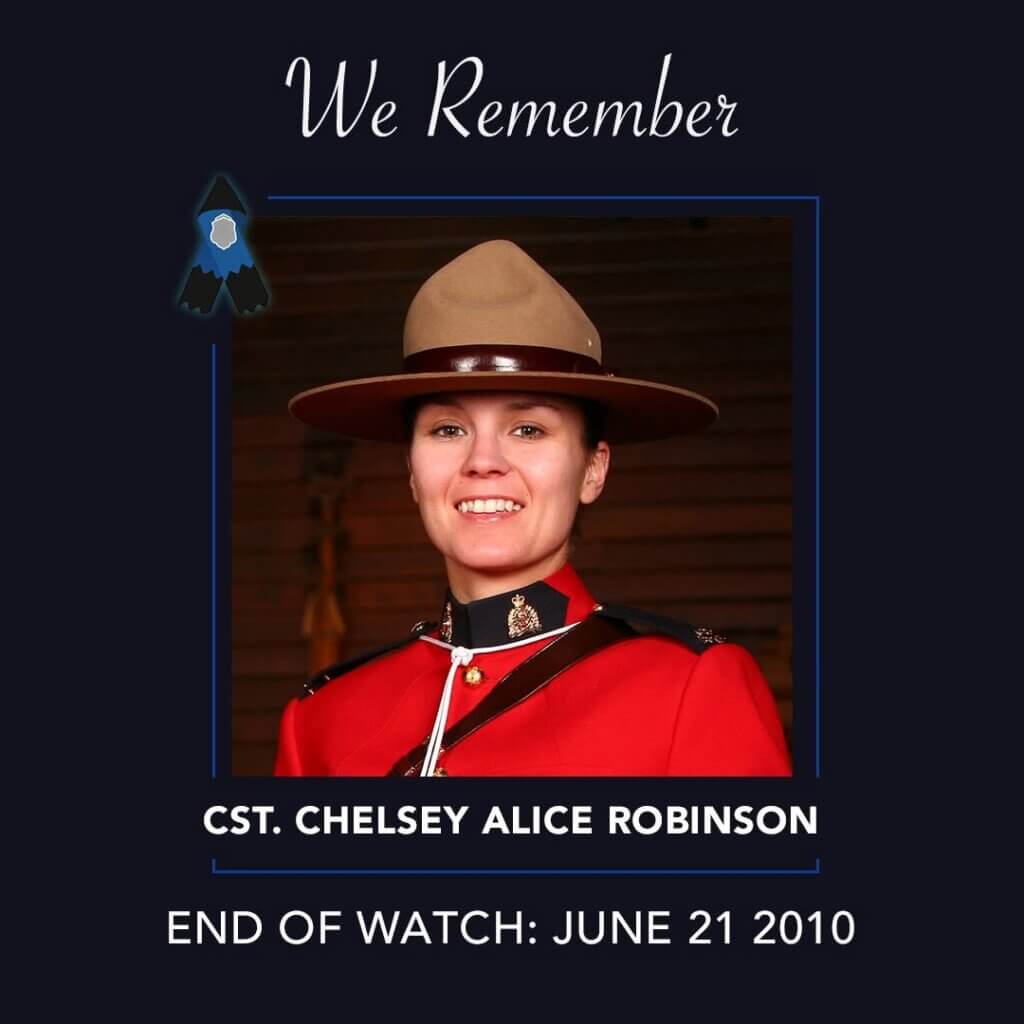
I thanked her for her daughter’s service to Canadians. In response, her mother said to me, “Thank you, and thank you for your service, too.”
This made me emotional because it made me realize that Chelsea left all these wonderful loved ones behind, and she never got to say goodbye.
This has stayed with me as a reminder to always honour and remember the officers we have lost in the line of duty.”
Cpl. J. Michael Francis, RCMP Member
“I think it is important for us to remember those who served because, inevitably, the community often does not. We need to respect and honour our people because they deserve it.
We train and do what we can to survive the encounters we are ultimately faced with, but it does not always go in our favour. When that happens, we need to honour those who made the sacrifice for the way of life that most of us want to live.
Remembrance for me looks like the RCMP never giving up on conducting regimental funerals when it comes to that and when they are wanted. We must come together, talk about our colleagues and never forget them.
Like many of my colleagues, I knew what the job entailed and what could happen to us. However, we never truly expect that we will see our colleagues or ourselves fall in the line of duty.
Having been around for 25 years, I have unfortunately had friends and colleagues murdered, shot and wounded, run over, stabbed or beaten and taken out of service.
The general public never sees the toll society takes on us all and may not realize how many are truly wounded in the line of duty.”
How We Remember
Anonymous RCMP Sergeant
“Like so many, I did not become a Member for money or glory. I did it to serve and to stand side by side with those willing to make the ultimate sacrifice.
One of my partners answered that call and was killed in the line of duty. He, and the others before and after him, deserve remembrance.
It is a recognition of sacrifice, and it should be treated with the utmost respect. It pushes us to keep moving forward and endeavour to honour that in what we do day in and day out.
I chose to quite literally carry remembrance on my sleeve. I have a tattoo with forget-me-not flowers, and one of the buds represents those who have fallen.
ANONYMOUS RCMP SERGEANT
With the changing world landscape and shifting priorities, I hope honouring and remembering remain at the forefront of what we stand for and showcase.
It is hard for a reason. That is why we need to keep a spotlight on it rather than worrying about making people uncomfortable.
Never forgotten.”
Cpl. Brett Urano, RCMP Member
“It is of great significance and importance to demonstrate respect and give recognition to the individuals who dedicated themselves to service. Their actions and leadership paved the path for everyone and provided protection for us across different periods and throughout history.
For me, remembrance means being present in uniform in a supportive capacity.”
Anonymous RCMP Member
“It is vital to carry traditions forward and honour them so they are not forgotten.
Remembrance is a day for reflection and patriotism.”
Anonymous RCMP Member
“Honouring those who served shows that their sacrifices were not in vain.
For me, remembrance normally means working. If I am off duty, I attend the commemoration in civilian dress.
In Flanders Fields always brings a tear to my eye.”
Anonymous RCMP Member
“Those who serve, and those who served before us, allowed the rest of us to be safe. To have someone help when no one else will. To allow us to live.
It is honouring and remembering those who fought and died so I could be free and wear the scarlet. So I could have children who, regardless of their race, skin tone, religion or sexual orientation, would be free.”
Robert, RCMP Member
“Those who are serving, those who have retired and those who sacrificed their lives all deserve to be acknowledged.
Remembrance means appreciating their service. Never forget those who are serving or who have served.”
Carrying Their Stories Forward
These reflections are different because every experience of service and loss is different.
Some contributors remember particular dates, places and conversations. Others think of a partner, troopmate, colleague, parent or child. Some carry remembrance through ceremony, uniform and tradition. Others carry it in the work they continue to do.
What connects their words is a shared responsibility: to remember the people behind the names, to support the families and colleagues who carry their absence, and to value those who serve while they are still here.
On Police and Peace Officers’ National Memorial Day, we honour those who lost their lives in service to their communities.
We remember who they were.
We tell their stories.
And we carry them forward.