

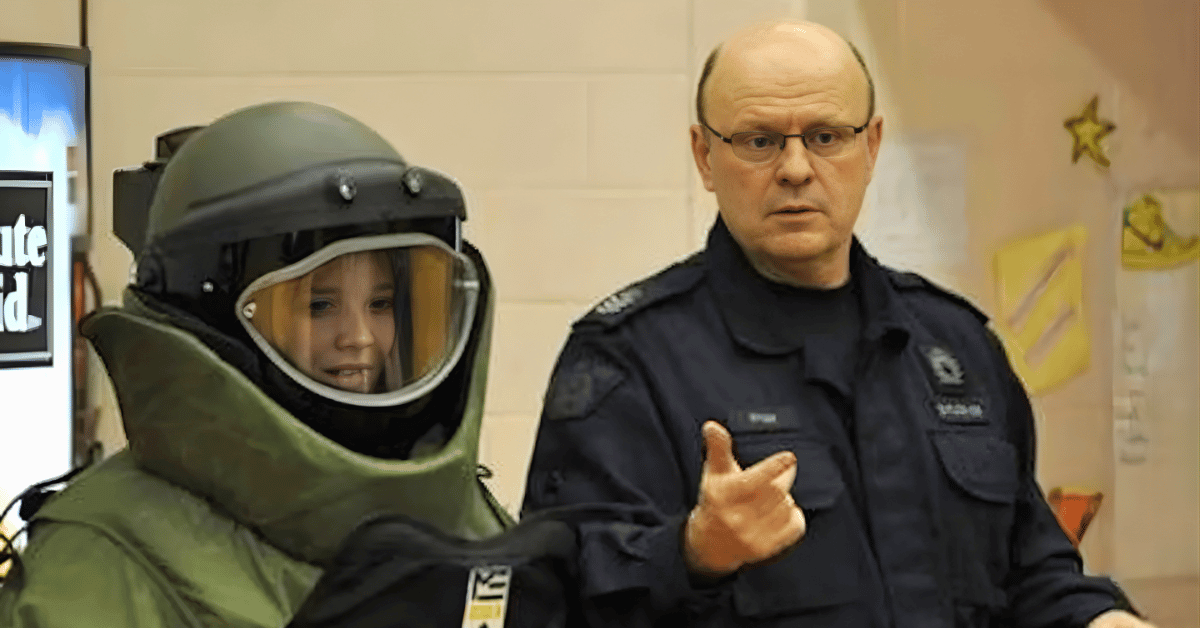
For 50 years, the RCMP’s Explosive Disposal Units (EDU) have responded to dangers most Canadians never see. This three-part series explores the people, philosophy, and evolution behind one of policing’s most exacting specializations.
Part 2 of 3 examines how the work evolved through the career of Sgt. Jamie Briggs, whose experience underscores a core EDU truth: technology creates distance, not safety—and success is measured by whether everyone goes home.
—
Before the time Sgt. Jamie Briggs joined the RCMP in 1980, he had already spent a decade with the RCMP Emergency Response Team. He recalls working collaboratively with an RCMP bomb entry expert, who encouraged him to explore the specialization with the RCMP. Jamie was sworn into the RCMP and eventually became the EDU Coordinator for H Division and supervised the Atlantic Region CBRNE Team, leading as the sole full-time technician across multiple provinces for 17 years.
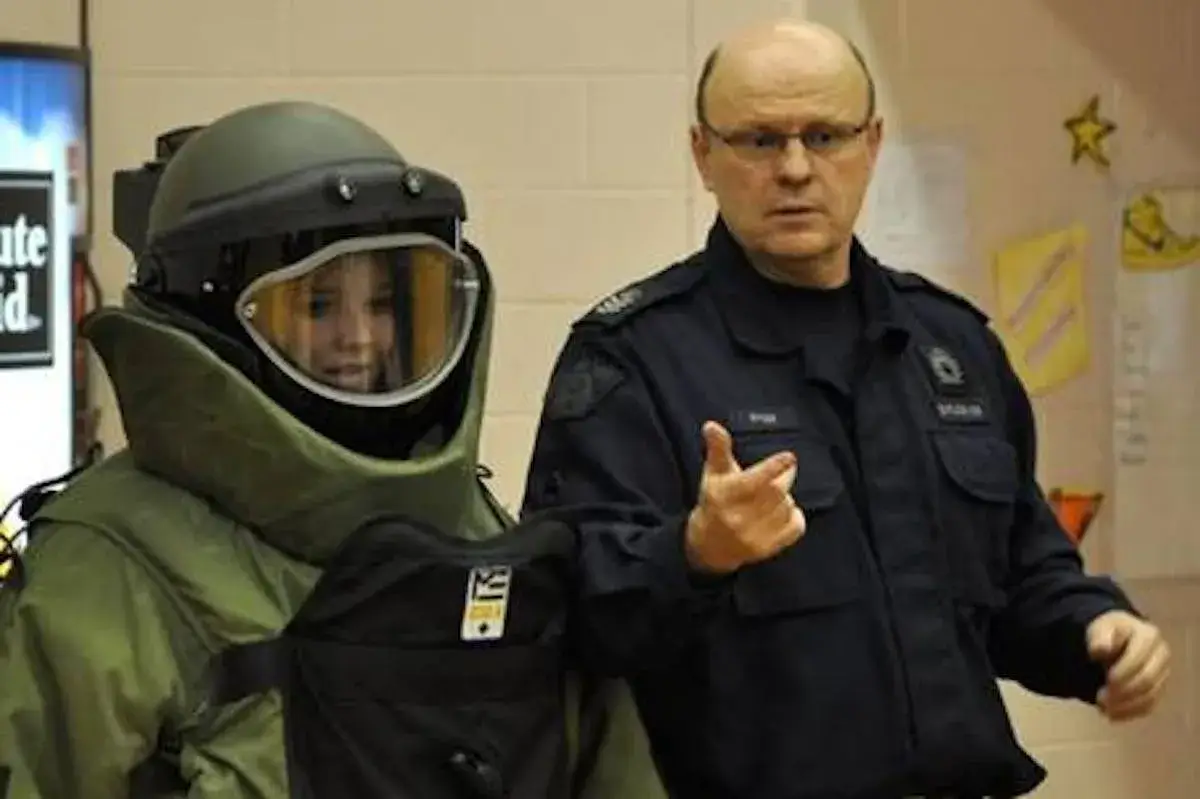
Over the years, technology transformed the field. Robotics, digital X-rays, and advanced chemical detection tools allowed EDU technicians to assess threats from a distance. Jamie embraced these innovations but remained clear-eyed about their limits.
“Technology gives you distance,” he said. “It doesn’t make the job safe.”
He remembers one barricaded-person call in Stewiacke, Nova Scotia, where a subject fired directly at an EDU robot.
“I didn’t lose a Member,” Jamie said. “I lost a camera. That’s a success.”
Not all hazards could be mitigated remotely. In 2005, during what he thought would be a routine disposal of expired marine flares in Liverpool, Nova Scotia, an explosion tore through a secure garage. Jamie survived, but the blast left permanent injuries: part of a finger gone, eardrums ruptured, shrapnel embedded in his upper body.
“If someone had been standing next to me,” he said quietly, “they wouldn’t have survived.”
He returned to work just weeks later, motivated not by bravado but by responsibility. Yet he never underestimated the toll on those at home.
“I handled it,” he said. “But my wife carried it longer.”
Through it all, Jamie’s philosophy was simple: no heroes.
“Everyone goes home,” he said. “That’s the measure of success.”
Despite the danger, Jamie reflects on the evolution of EDU with awe.
“When I started, we only had a flashlight, a revolver, and a set of handcuffs,” he said. “Now we have robotics, advanced chemical detection, digital X-ray… the capability we have now is incredible.”
But he stresses that even the most advanced tools don’t eliminate the human element. Each call demands judgment, precision, and restraint under intense pressure.
From secure detachment garages to barricaded homes, Jamie’s career demonstrates that explosives work is about more than technical skill. It’s about responsibility, trust, and preparation, knowing that every decision can mean the difference between life and death.
For Sgt. Briggs, the lessons of a lifetime are clear: training and technology are essential, but the ultimate measure of success is the same it’s always been—keeping your team and the public safe, and ensuring everyone goes home.
Then vs. Now: How the Work Has Transformed
1970s–80s
- Hotsticks and rope kits
- Heavy, military-style bomb suits
- No (or low-tech) robotics
- Single-shot X-ray plates
- Minimal protective standoff
- Small teams, often travelling long distances alone

Today
- Advanced, lightweight bomb suits influenced by Canadian research
- Specialized robotics capable of precise manipulation
- Digital X-ray systems with instant imaging
- Jammers, disruptors, and precision tools
- National standards for training and response
- Integration with CBRN (chemical, biological, radiological, nuclear)
- Strong interagency partnerships with military and municipal bomb squads
The difference is profound—but the heart of the work remains the same.
Canadian Ingenuity on the World Stage
One of EDU’s most significant contributions has been its influence on global bomb disposal standards.
Canadian research helped shape the design of modern bomb suits used around the world. Canadian technicians developed procedures that other nations adopted.
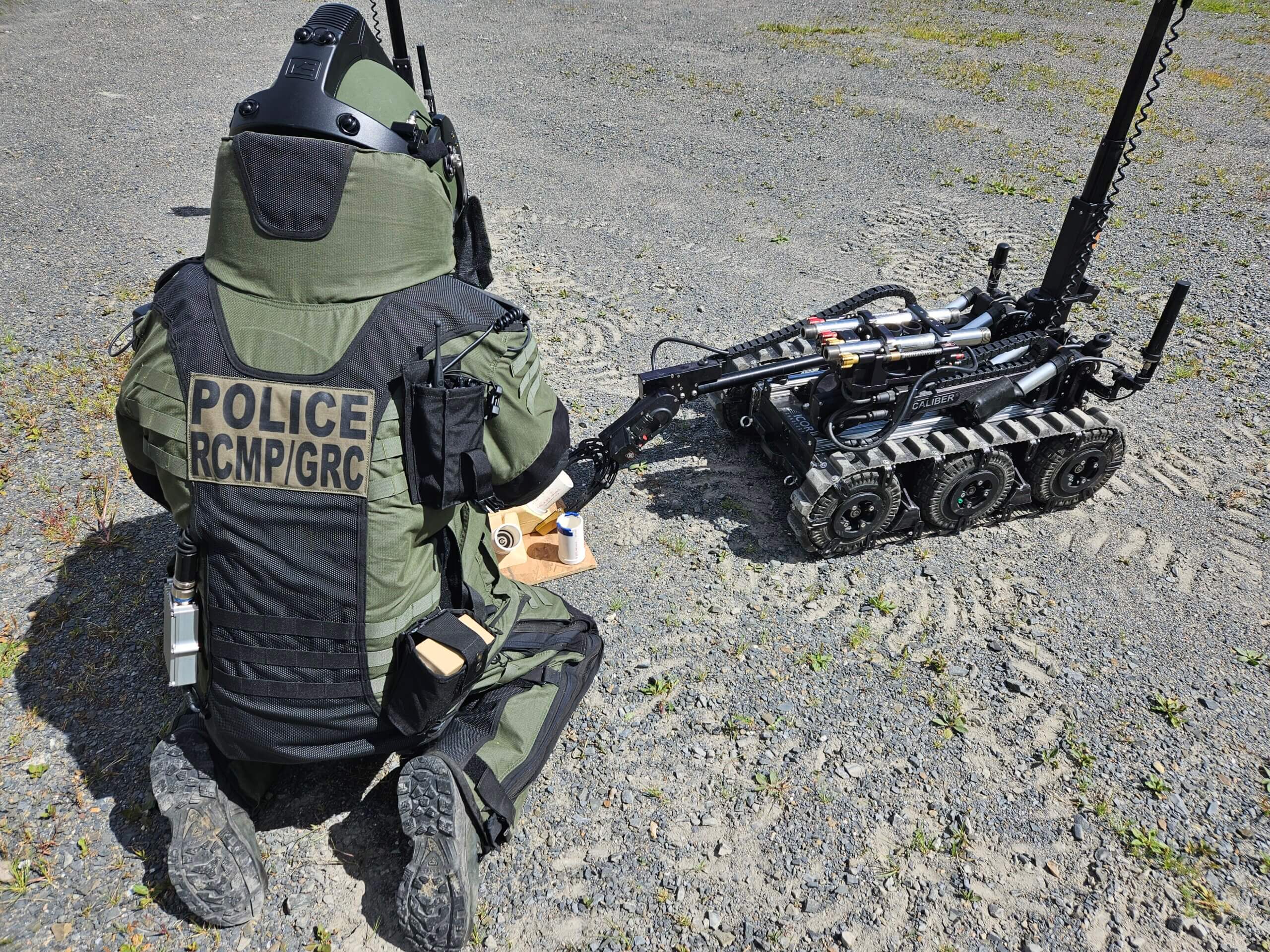
Canadian EDU units became known for professionalism, creativity, and collaboration.
Even today, international partners sometimes remind Canadian bomb techs:
“Your methods? We use those now too.”
—
As tools advanced and standards strengthened, one truth never changed: explosives disposal ultimately comes down to judgment.
In Part 3, we move into the present day—where national coordination, policy, and leadership intersect—and meet the people responsible for making the hardest calls when there are no perfect answers.